

NSFW: Grub Hub
The bane of my existence in the garden: beetle grubs munching away in the protected eden of my rooftop containers

I hope you’re not eating, because I need to discuss one of the worst things about gardening in containers, at least for me. I find beetle grubs disgusting, even after fully understanding the important role they play in nature. They just look creepy, and they seem to love munching on my roots. If I was a good old fashioned dirt farmer, growing things in or near the ground, I could count on more things looking for these buggers, but my pots and container seem to be a paradise for them. Today, while planting out a chervil seedling, I noticed a bunch of fat ones in a large grow bag in which I’d placed one of my tomato plants. This is aggravating, because it’s full of ‘new’ store-bought compost. Seeing the slimy-looking bastards set me off, and I went on a real tear, digging out as many as I could find:
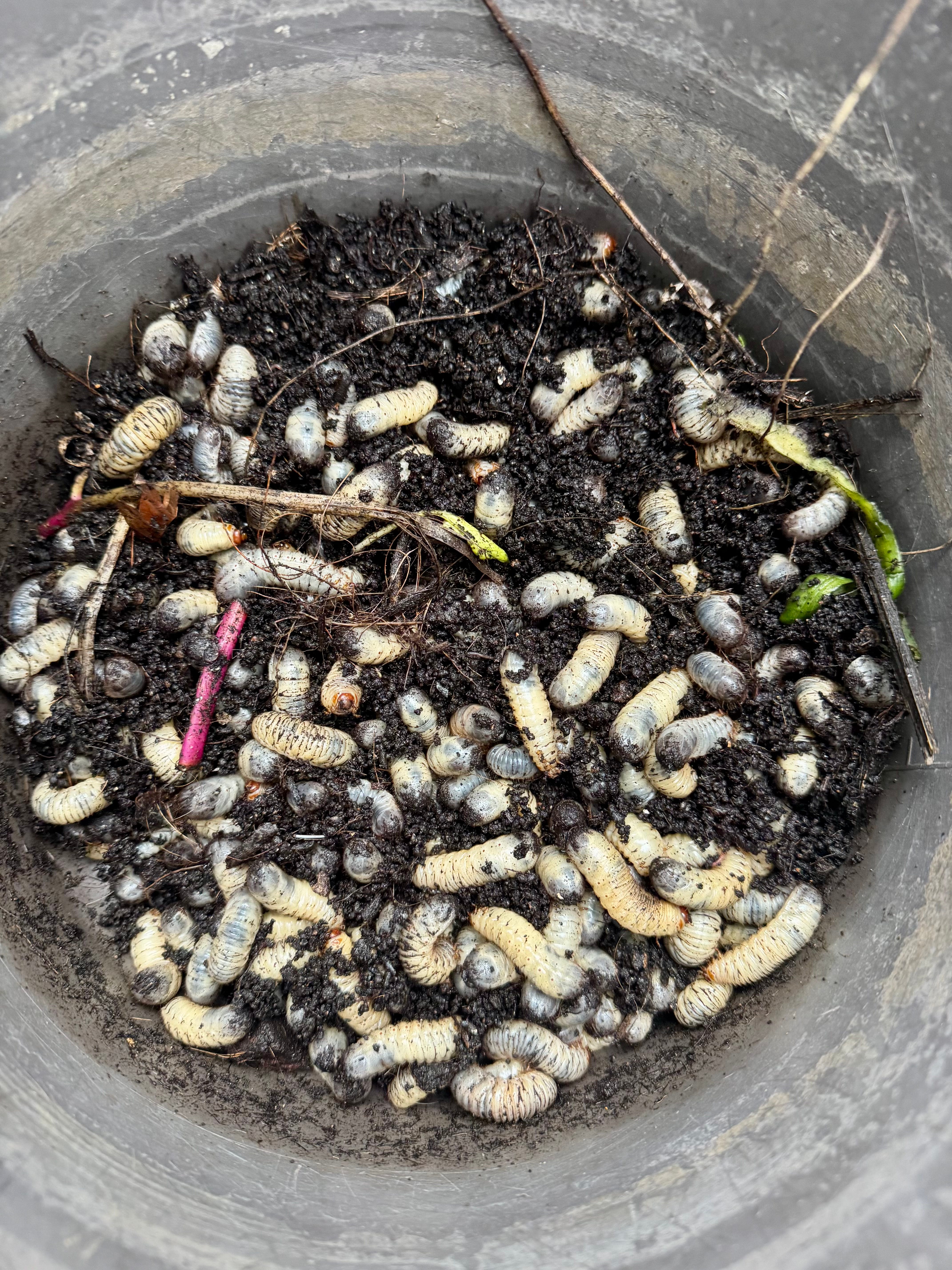
Ok, that’s a bit of a cheat - I also dug through my compost bin, which is seemingly 50% grub.
Last year I had the same problem, and convinced myself that much of my failed veggies were due to these thugs munching my roots - ignoring the extreme heat of Tokyo’s summer, and the fact that (I don’t think) I added any kind of fertilizer after July; maybe the containers were just exhausted. At any rate, I flew back with some milky spore powder from the US, but I got impatient and guiltily attacked my biggest container with diazinon. This horrible poison worked wonders, but I had to be up early every morning to get the dying grubs off the surface before the birds did - and I’m sure the poison powder wasn’t good for anything else in or near that soil.
Usually these days, when I find a grub, I just throw it over the terrace divider onto the roof for the birds to get; they’ve done so much damage to my plants that I sometimes watch them struggle. Today, after picking hundreds of them out of containers and my compost, I wondered if they could come back. Maybe I should drown them? It turns out that grubs—particularly those of Japanese beetles and related scarab beetles—cannot crawl very far at all once unearthed. They are poor movers, adapted for burrowing within moist soil rather than walking across open ground.
Most white grubs can only travel a few inches through the soil, primarily to adjust for temperature and moisture conditions. They remain within the root zone (typically the top 5–10 cm) during feeding and may dig down a few inches deeper in winter to avoid cold temperatures. When exposed above ground, they desiccate quickly, die from heat or dryness, or are eaten by birds—so they won’t crawl back into containers once removed.
So back to this milky spore powder: it’s supposed to be a natural, long-lasting way to control Japanese beetle grubs in the garden. It contains spores of the Bacillus popilliae bacterium, which infect and kill the grubs as they feed on grassroots. Once a grub dies, billions of new spores are released into the soil, spreading the treatment naturally over time. Though it takes a year or two to build up, milky spore can provide protection for a decade or more—especially when applied consistently and combined with healthy soil practices.
The most direct way to know if milky spore is effective is to check for infected grubs when you sample your soil. Infected grubs develop a characteristic milky white appearance in their body fluids (hemolymph).
While I wait, there’s one thing I can be thankful for: they make very short work of anything I put in the compost bin:
If memory serves (I need to keep better notes, which is one reason I’m writing here) a few weeks ago I put a thick layer of shredded paper, and a lot of kitchen scraps and garden waste. No sign of paper at all today:
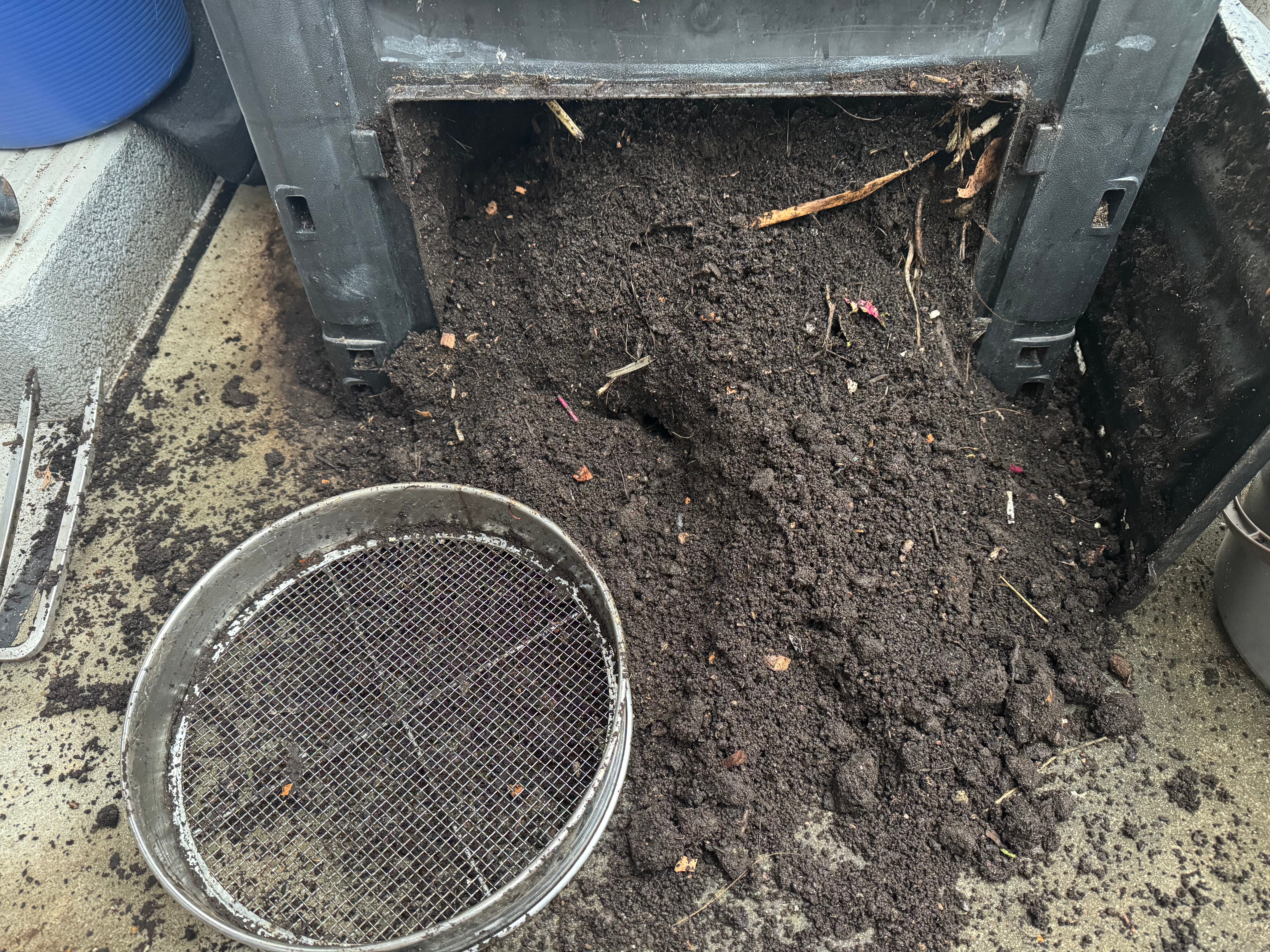
But the grubs were EVERYWHERE! So much so that I had to sift to be sure they wouldn’t make the trip to a new home.
So I scoop a load of this stuff into the sifting pan, or whatever it’s called:
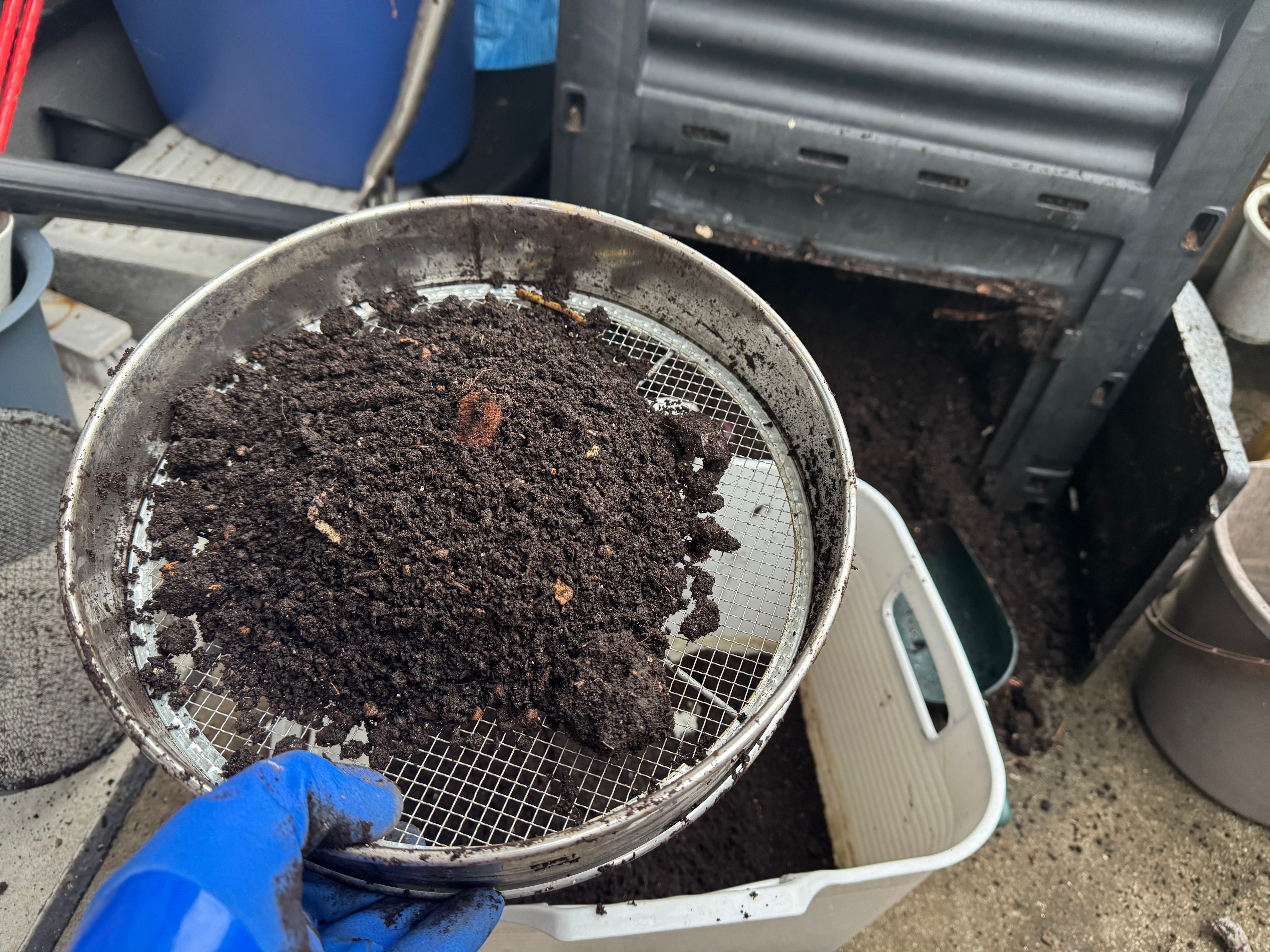
Shake it like a polaroid picture:
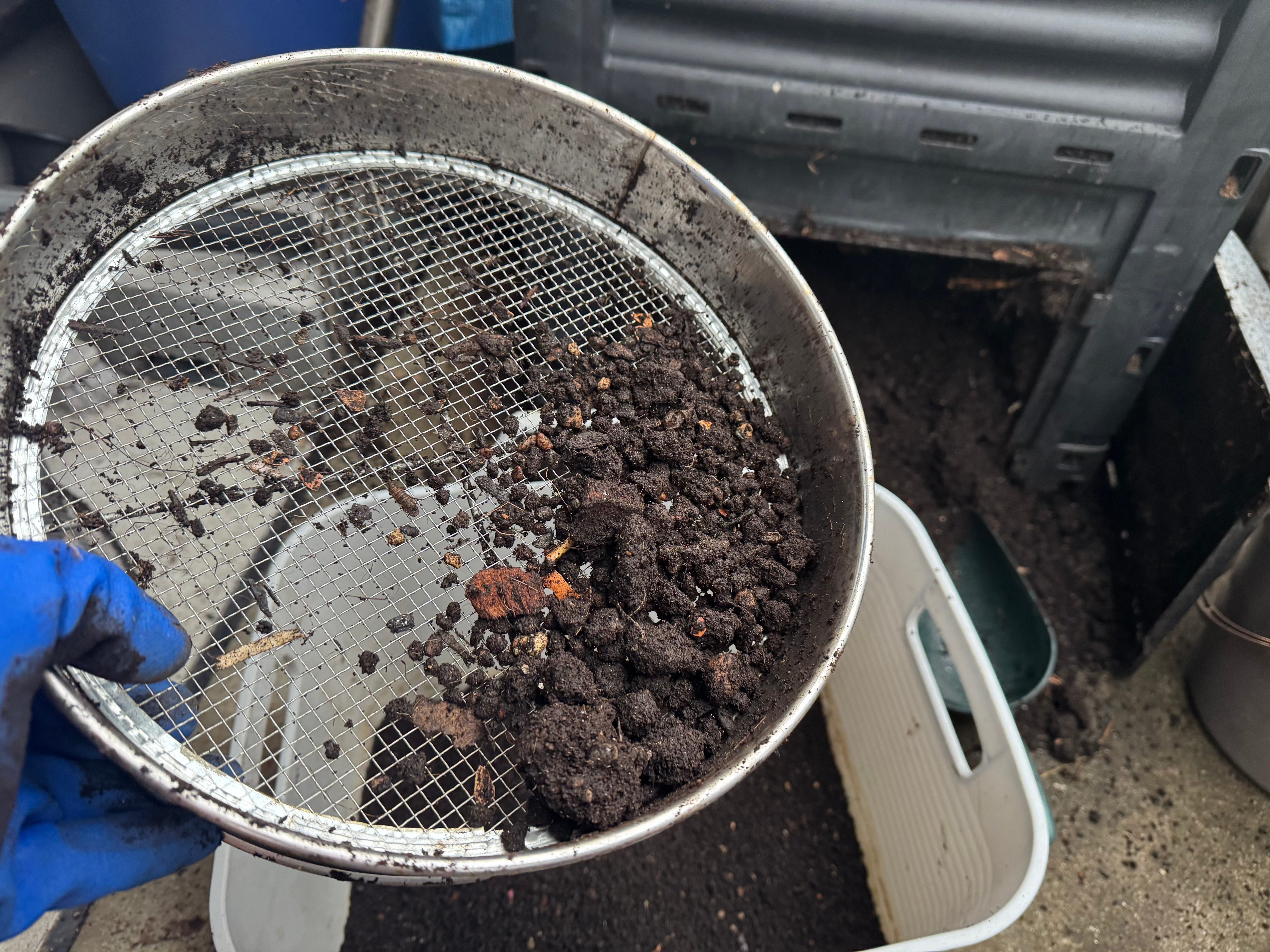
Dump any undigested chunks back on top, and I’m left with crumbled chocolate cake:
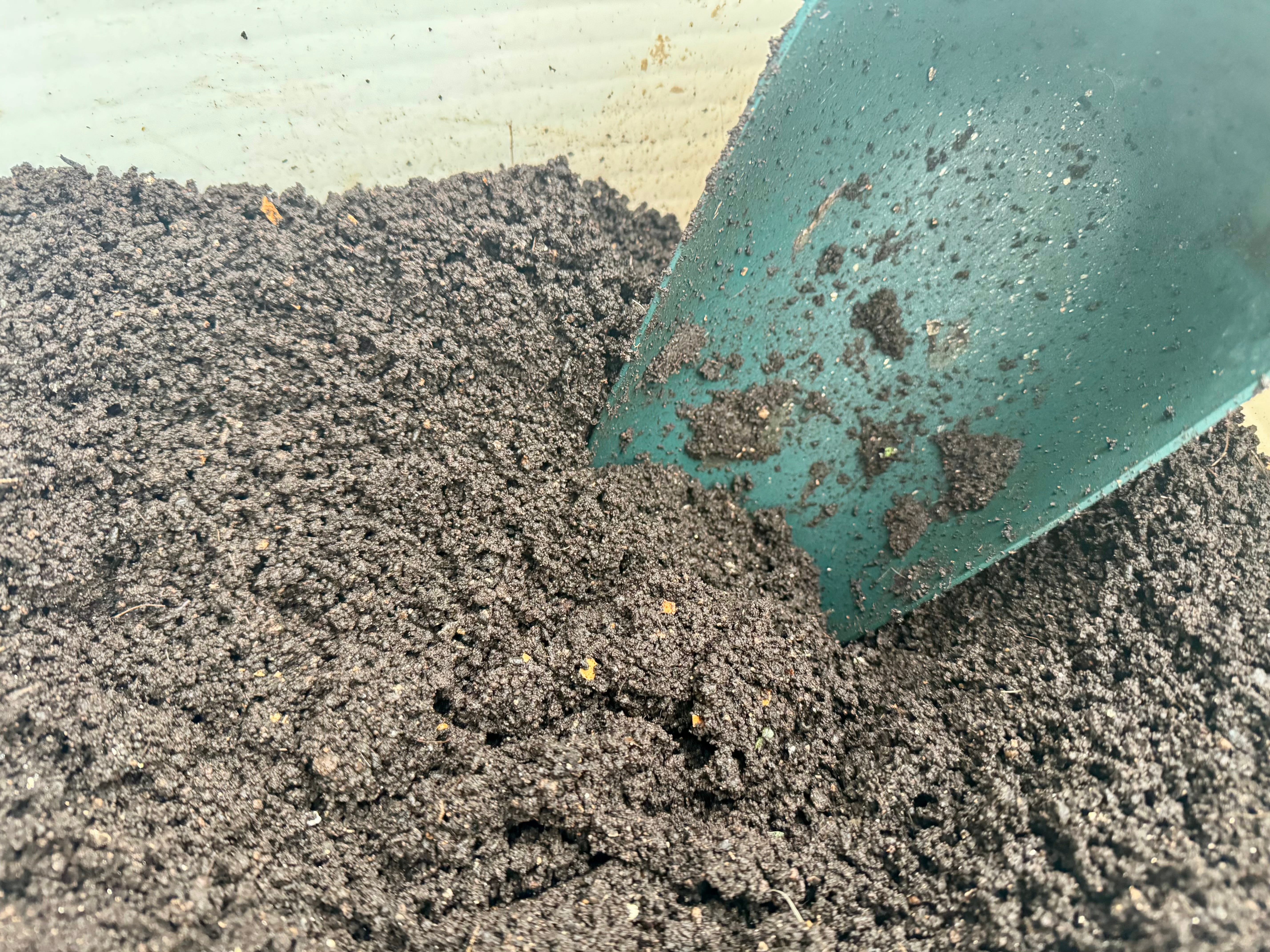
But damn, I just hate dealing with those ugly grubs.
I’m going to get a worm farm, because vermicomposting sounds much better than all this faff, as the brits would say!