

Nahema Rose
Probably the best-smelling rose I've found...

Our apartment’s north wall gives onto two large roof terraces. The angle of the sun is such that in winter, only the very edge of the terrace gets sun, so consequently most of our plants are up against that frosted-glass wall.
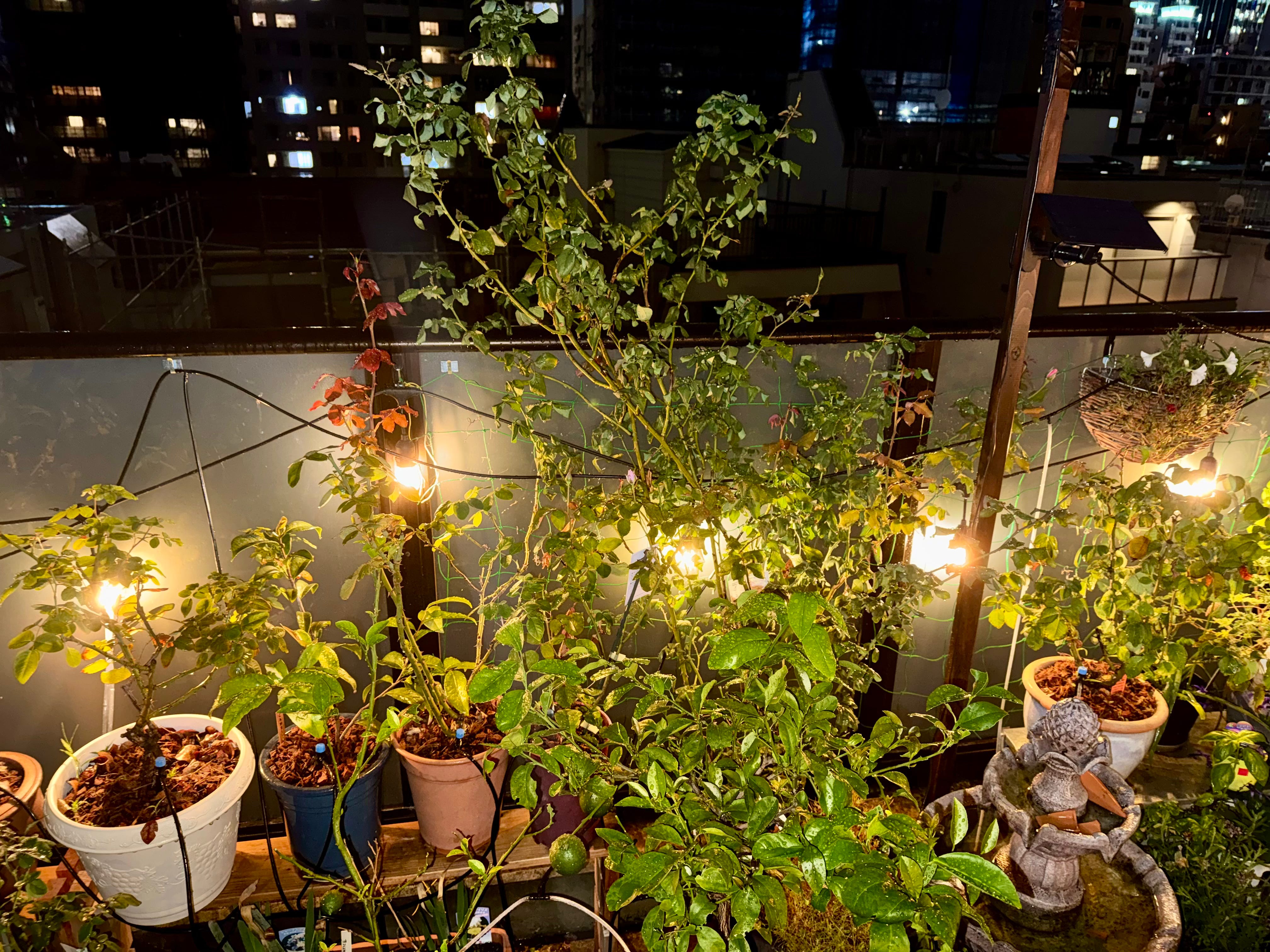
I’ve been searching for something that will at least grow, if not thrive, against the wall - ideally something fragrant that would waft in when we have the sliding door open.
On a visit to Karuizawa Lake Garden, we browsed the selection of rose bushes, and asked the staff for a fragrant climber, tolerant of shade. They narrowed it down to a few varieties and we chose Nahema based on our (iPhone) research.
Nahema is a climbing rose cultivar celebrated for its lush, softly-pink blooms and intense fragrance. It belongs to the Large-Flowered Climber class, offering a blend of romantic appearance and garden performance. Created by Georges Delbard, whose roses are known for scent and grace, Nahema’s lineage traces back to Grand Siècle and Heritage, and her name—borrowed from Guerlain’s opulent perfume—suits her perfectly: romantic, almost nostalgic. Although developed in 1991, Nahema was officially introduced in France in 2006.
Well… a couple of months ago we gave up on the wall idea and moved it into the sun. In the first photo, she’s the big tree-like thing; I still haven’t yet figured out how I want to train it against the glass.
One AI summary stated: “In the garden, she is generous but particular. Give her sun, good soil, and space to lean against a trellis or arch. She’ll reward you with waves of blossoms through the season, each one a small beautiful ball of perfume.” Sun indeed - this thing has exploded since its move and we’re now on a second flush of flowers. I can’t get enough!
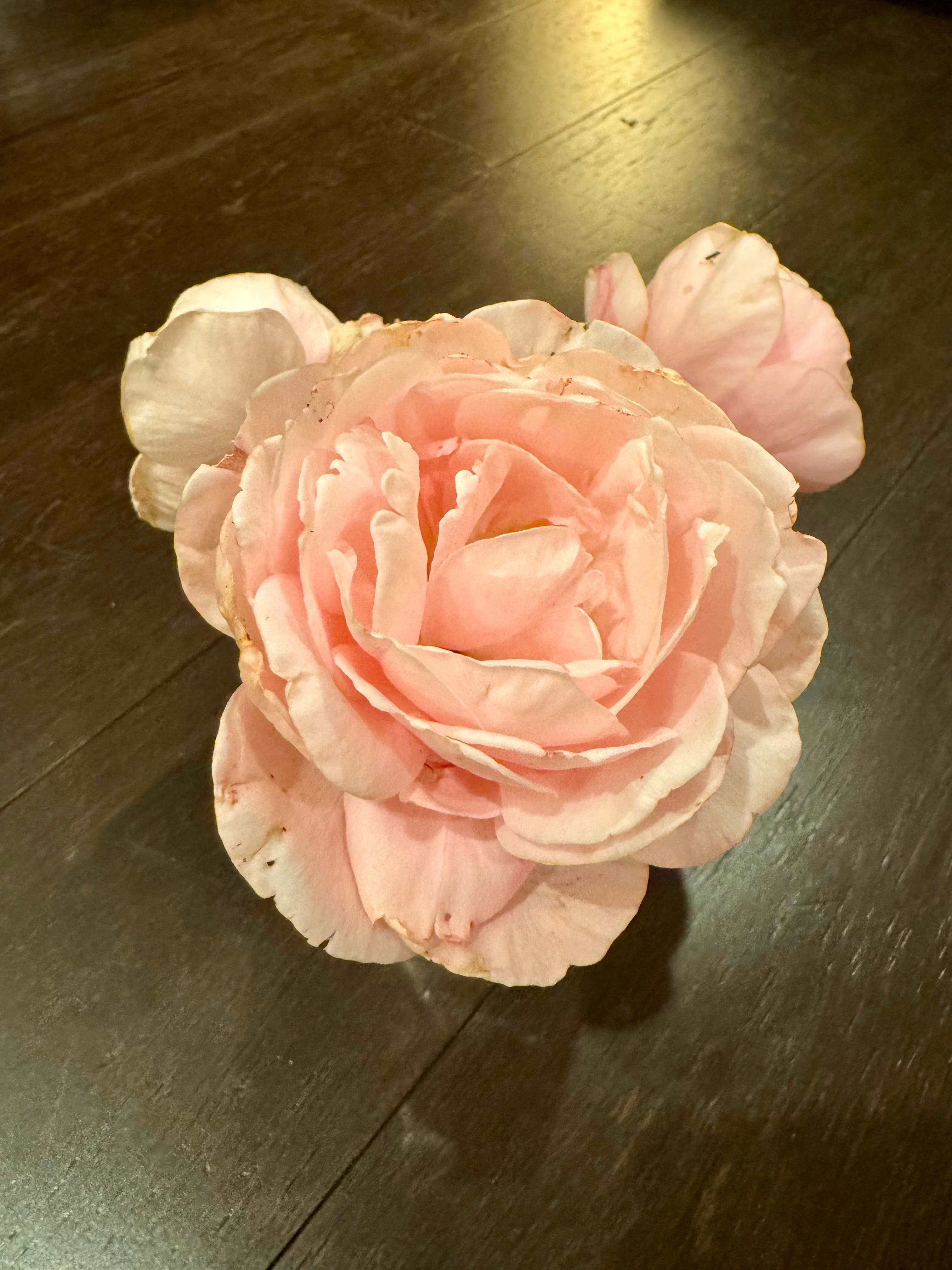
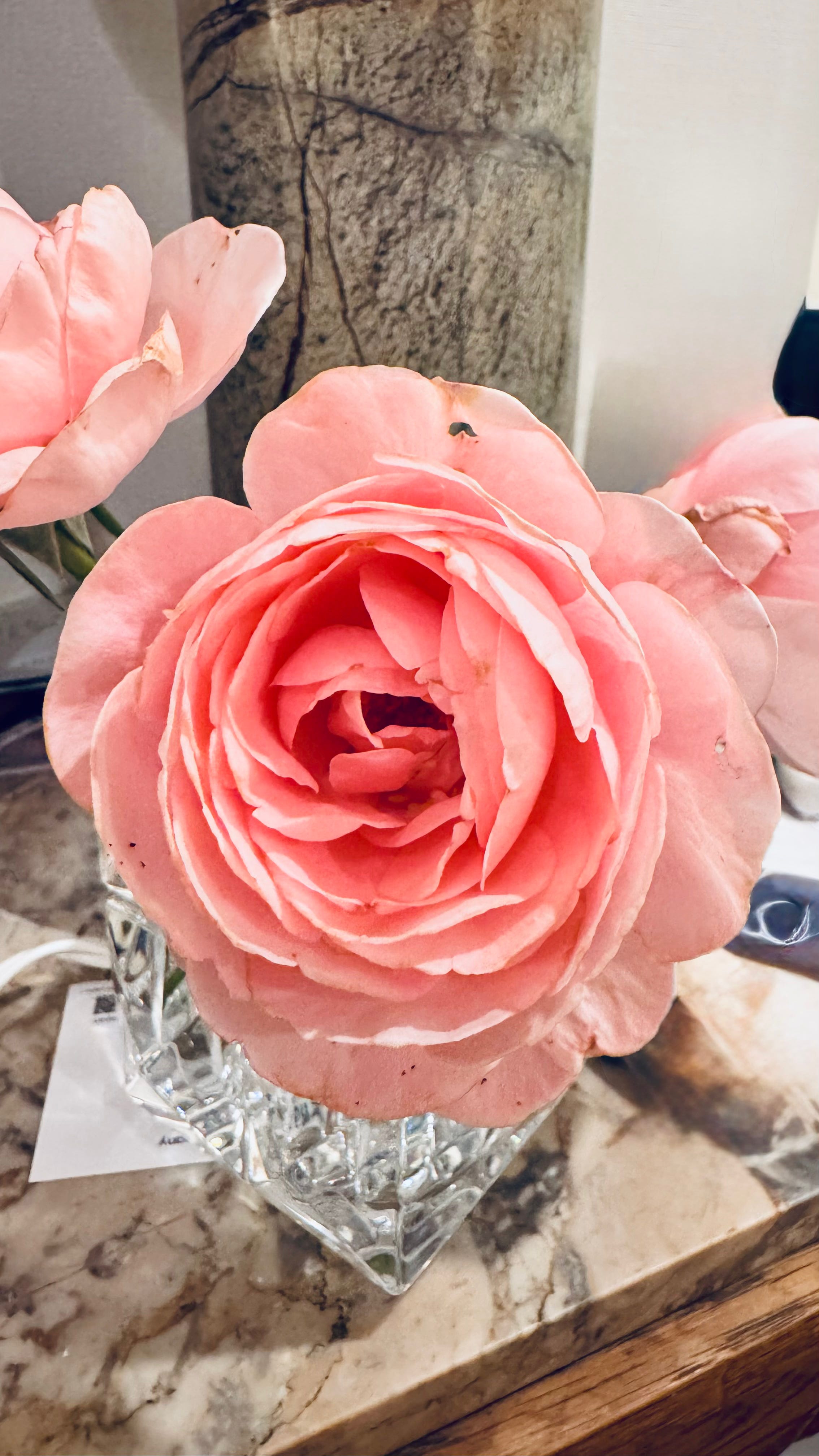
Nahema stands out among climbing roses primarily for the combination of its perfume and form. Many climbers offer large blooms or vigorous growth, but fewer deliver that old-rose cup form and a powerful scent. Gardeners online note that it performs well for cutting (blooms retain form) and in fragrant borders. However, I have found that the cut flowers only last a couple of days before shedding petals - but even this is part of the fun because they’re so numerous and luxurious that its like the proverbial bed of roses. From a tight, packed bud it opens gloriously:
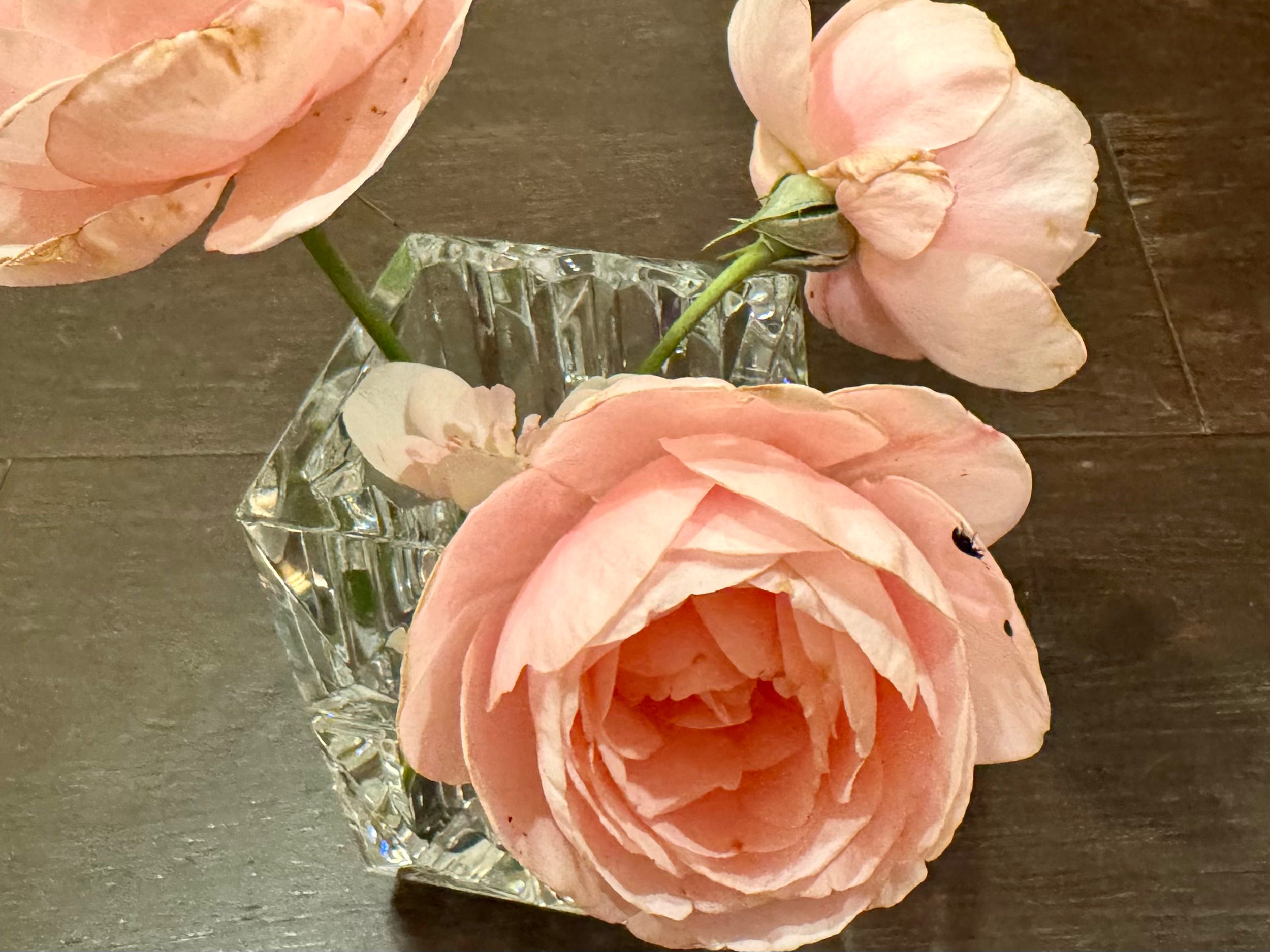
Bloom form & color: The flowers are large (approx 8–10 cm) with very full, deeply-cupped petal structure, evoking old-fashioned roses. The color is soft almond-blossom to pale pink.
Fragrance: A key feature — a strong, fruity/rose scent with hints of citrus, peach, apricot and pear.
Growth habit: Vigorous climber, reaching heights of ~2–3 m (or more) with a spread of ~1.5–2.5 m. It can be trained on pillars, fences or pergolas.
Blooming: Repeated flushes throughout the season, offering generous flowering.
Foliage & disease resistance: Foliage is dark green and considered fairly robust; the rose is valued for its healthy behaviour in many gardens.
Pruning: After main flushes, dead-head spent blooms to encourage further flowering. In late winter/early spring, remove weak canes and train main canes horizontally for better flowering.
Soil & water: As with most roses, well-drained, fertile soil will help performance. Ensure consistent watering especially in hotter or drier climates.
Climate: Listed for USDA zones ~6b–9b; gardeners in cooler zones may grow it with some winter protection or in a sheltered position.
Important note: Some sources note that in very wet conditions, flower buds may not open fully or may be prone to rain damage.